Twelve elements glow in their own colour
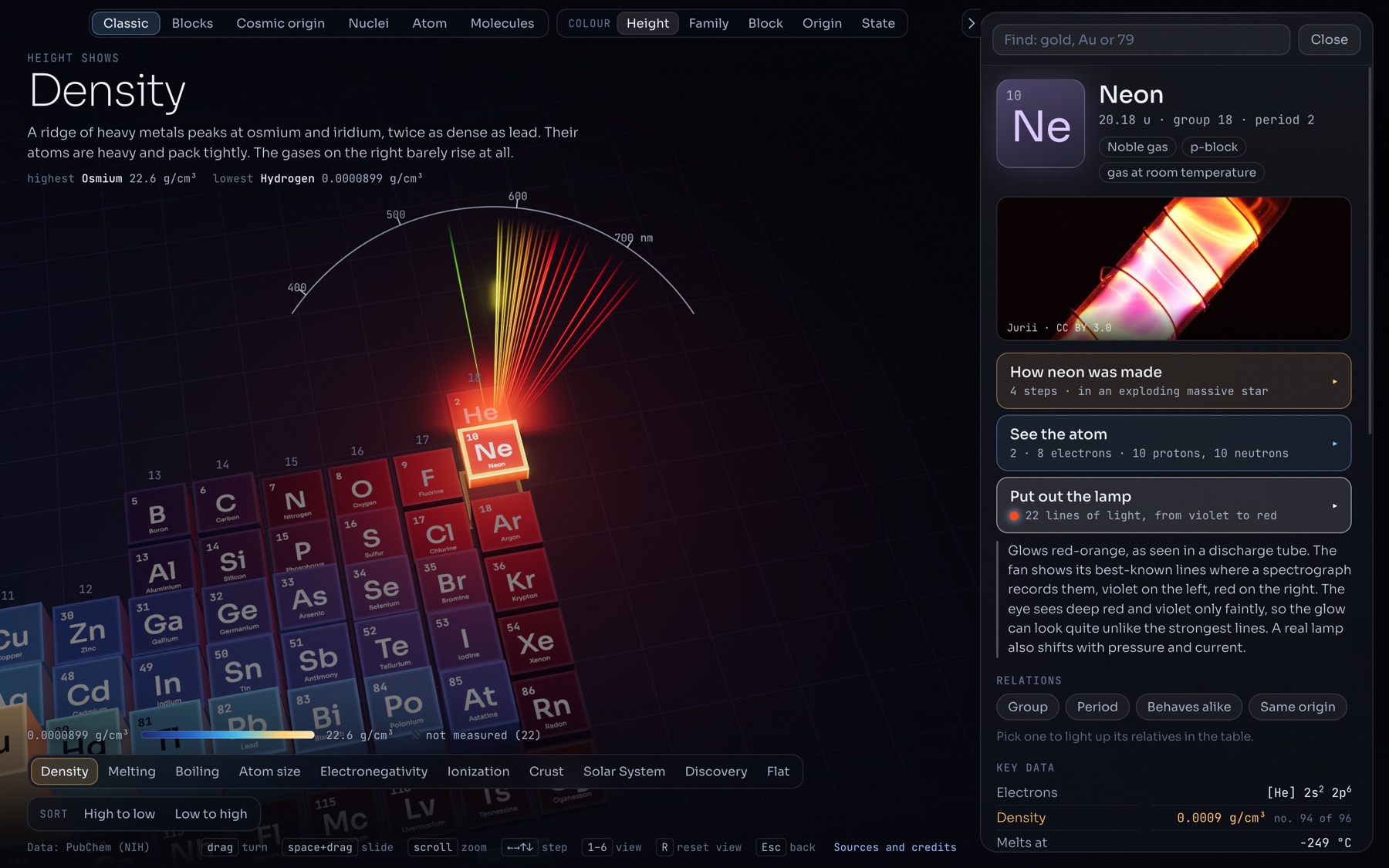
Light neon, sodium or mercury and the room goes dark. The glow falls on the tiles around it, and above it the light fans out into the spectral lines it is made of, each at its measured wavelength.
Turn it, heat it, sort it and light it up. Look inside the atom, build molecules, and follow every element back to the star that made it.
Mac App Store coming soon
Light neon, sodium or mercury and the room goes dark. The glow falls on the tiles around it, and above it the light fans out into the spectral lines it is made of, each at its measured wavelength.
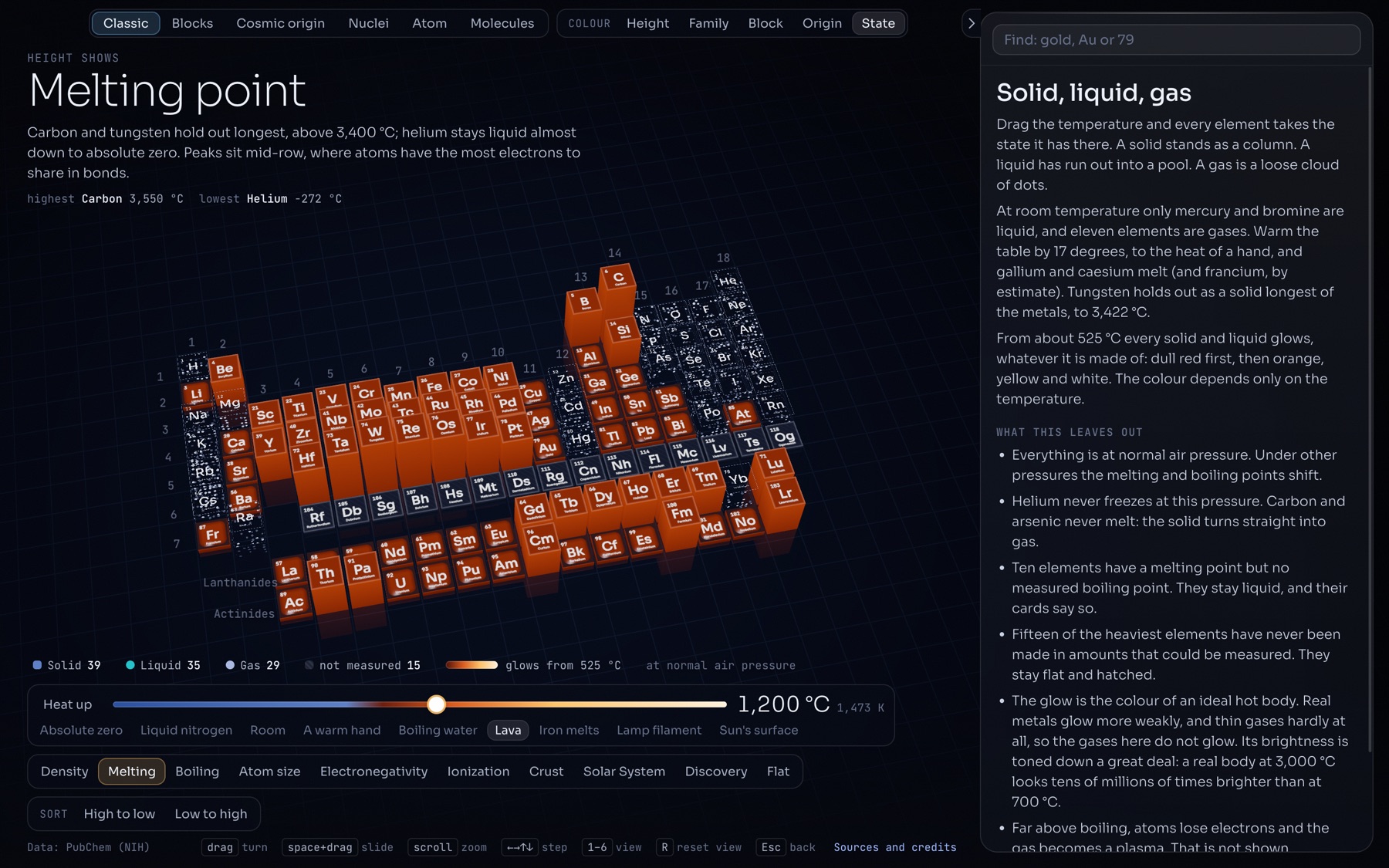
Drag the temperature from −273 °C to 5,700 °C. Elements melt into pools, boil away as gas, and the ones still standing begin to glow, first red, then white.
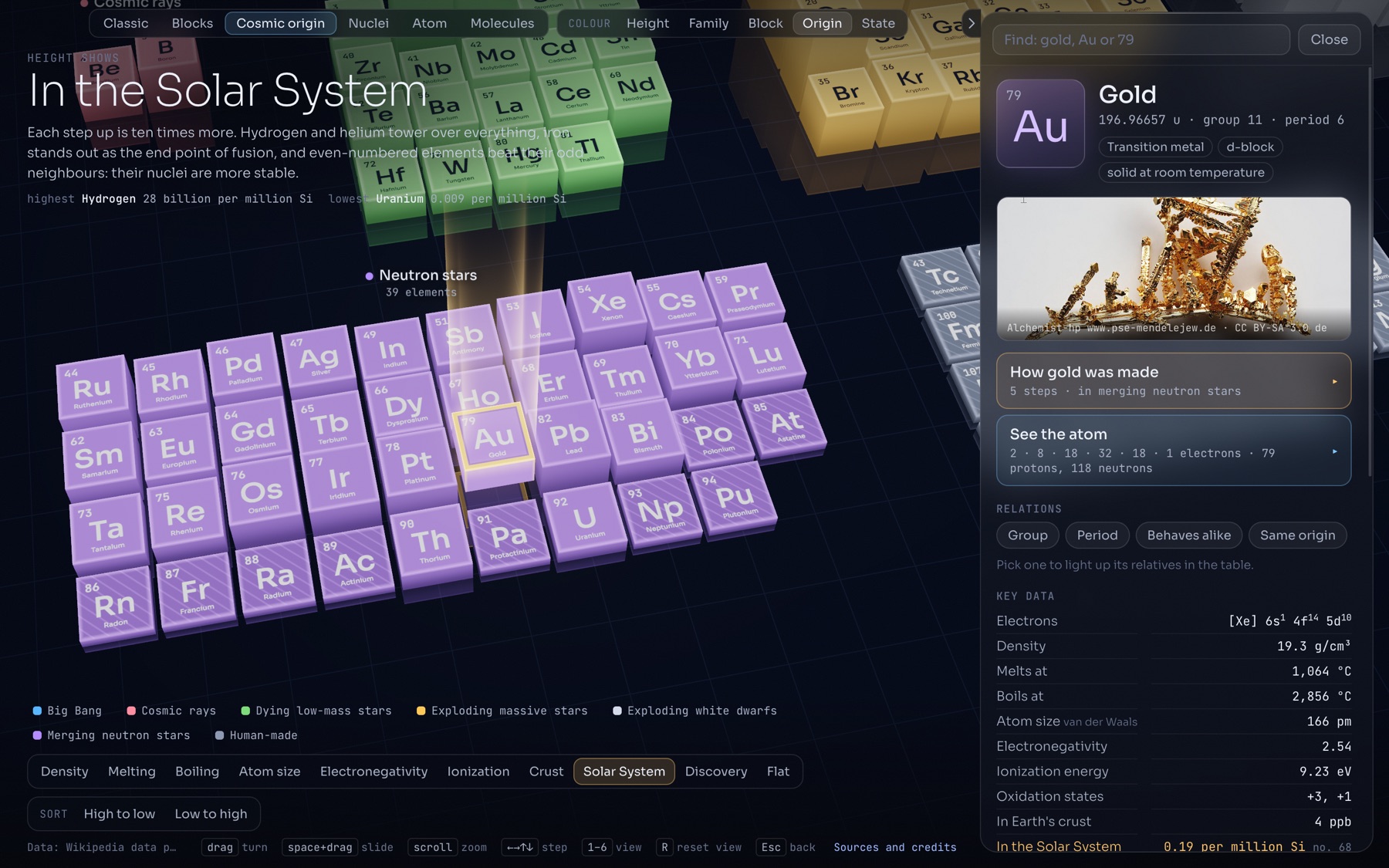
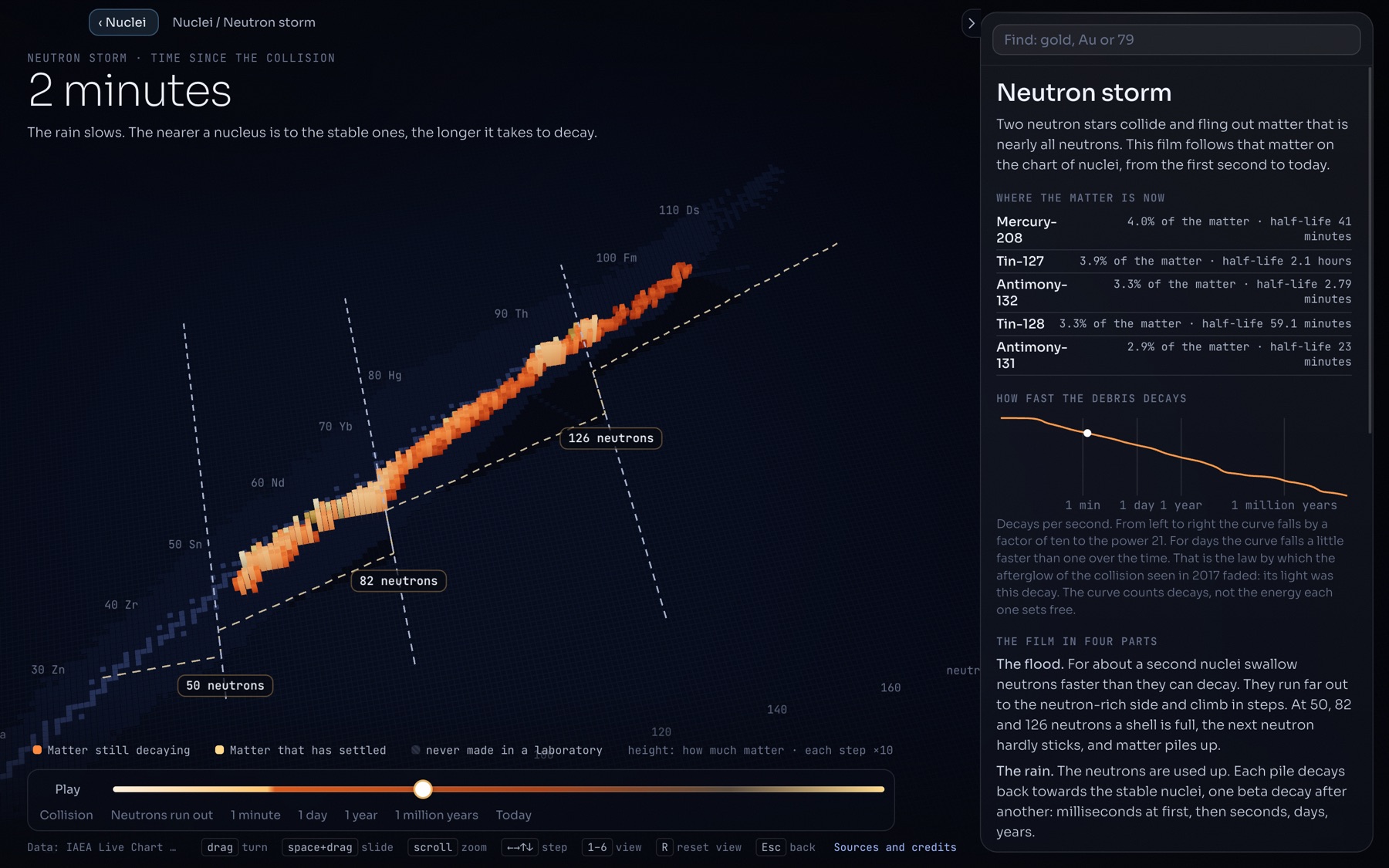
The Big Bang, the heart of a star, an exploding white dwarf, two neutron stars colliding, or a laboratory. Every element has an origin journey you can play step by step on the chart of all 3,383 known nuclei.
Two neutron stars collide. Nuclei swallow neutrons faster than they can decay, then rain back towards stability. What is left, billions of years later, is the gold and platinum in the ground.
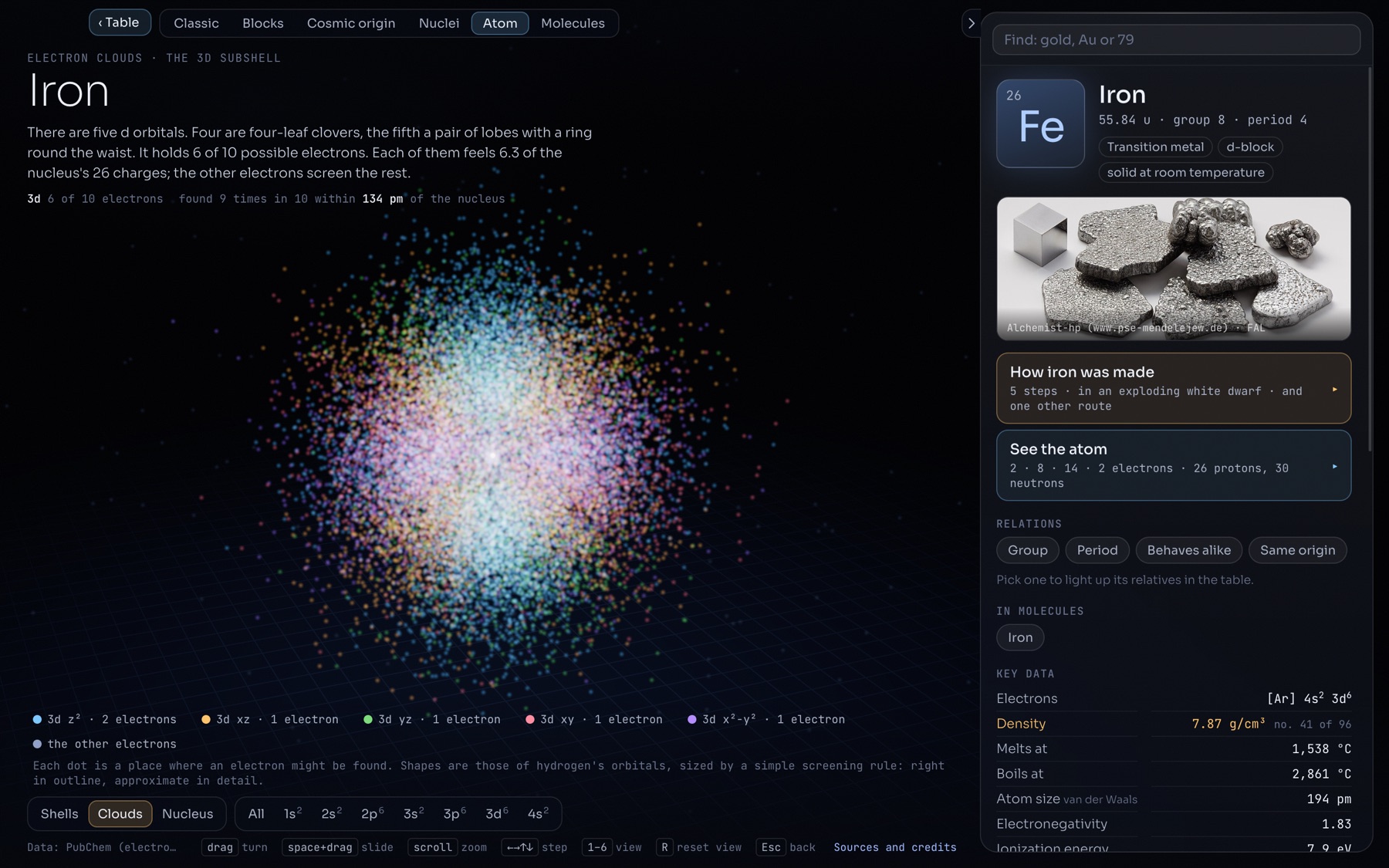
See the electron shells fill, then switch to the clouds: every orbital in its real shape, one subshell at a time. The nucleus shows its protons and neutrons, and how it decays.
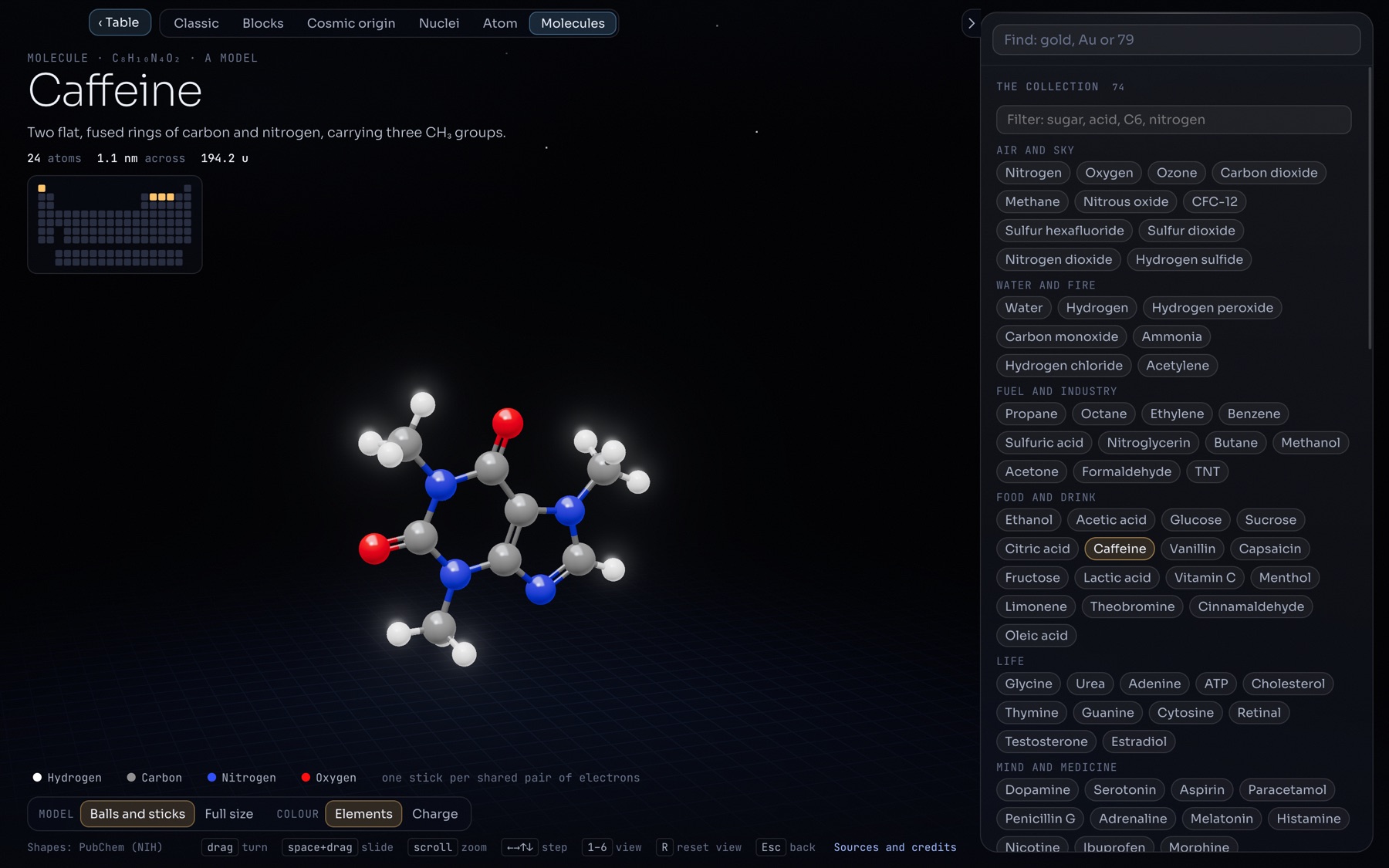
Water, caffeine, the letters of DNA, diamond and ice, each assembled from its atoms. Switch between balls and sticks and full-size atoms, and see where the electrons are pulled.
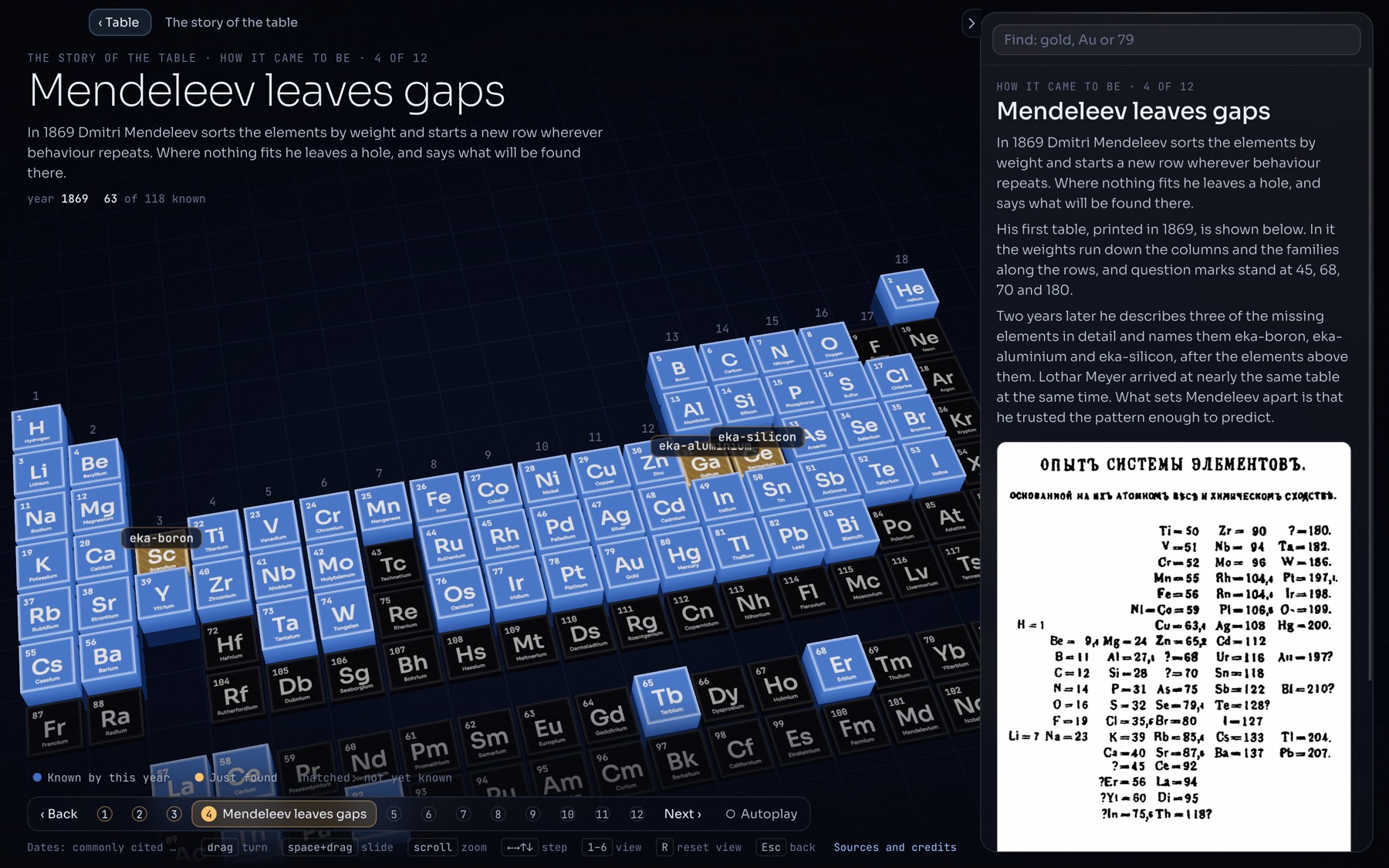
From the eleven elements known in antiquity to Mendeleev, who left gaps and said what would be found in them, and on to the elements that only exist because people made them.
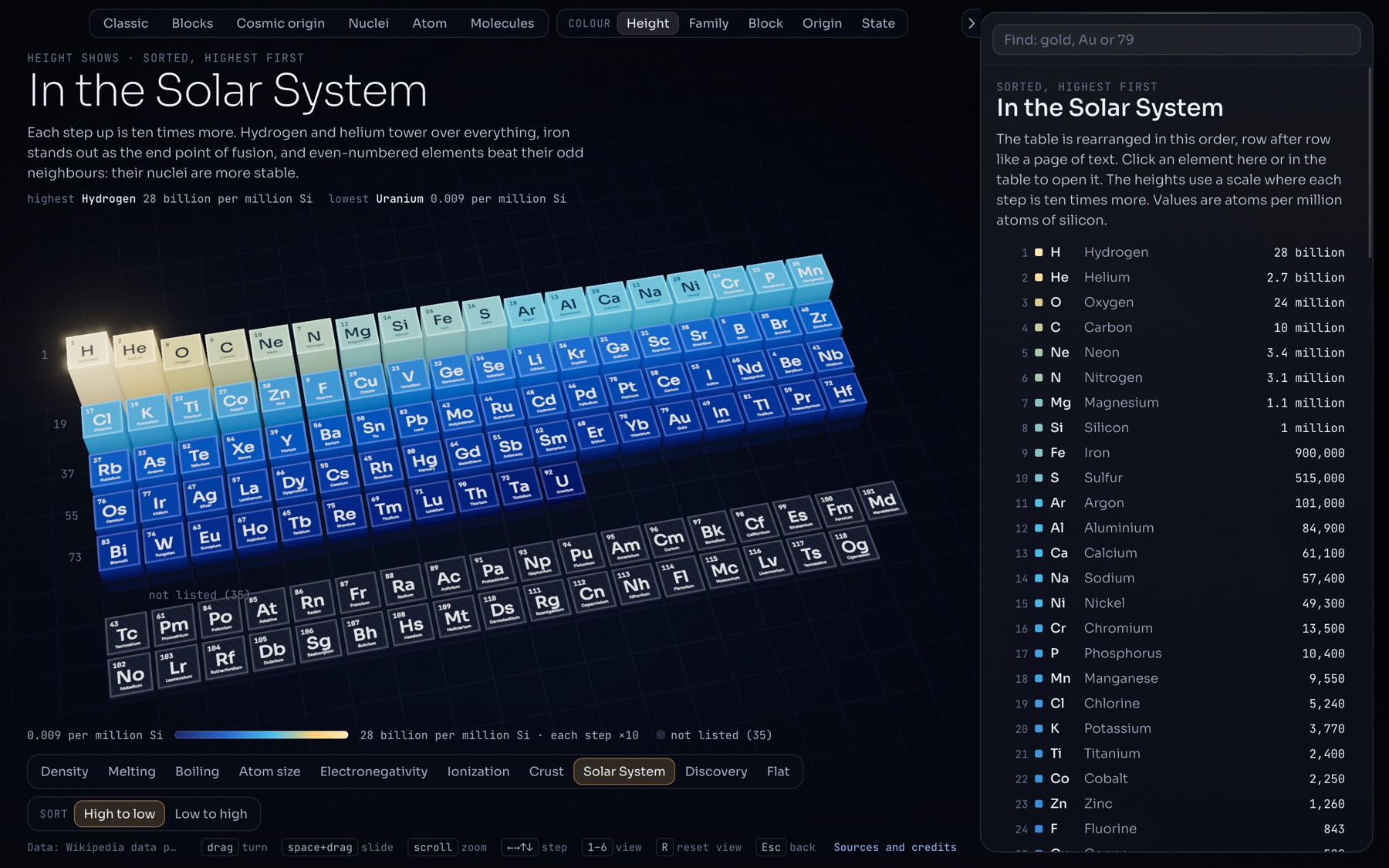
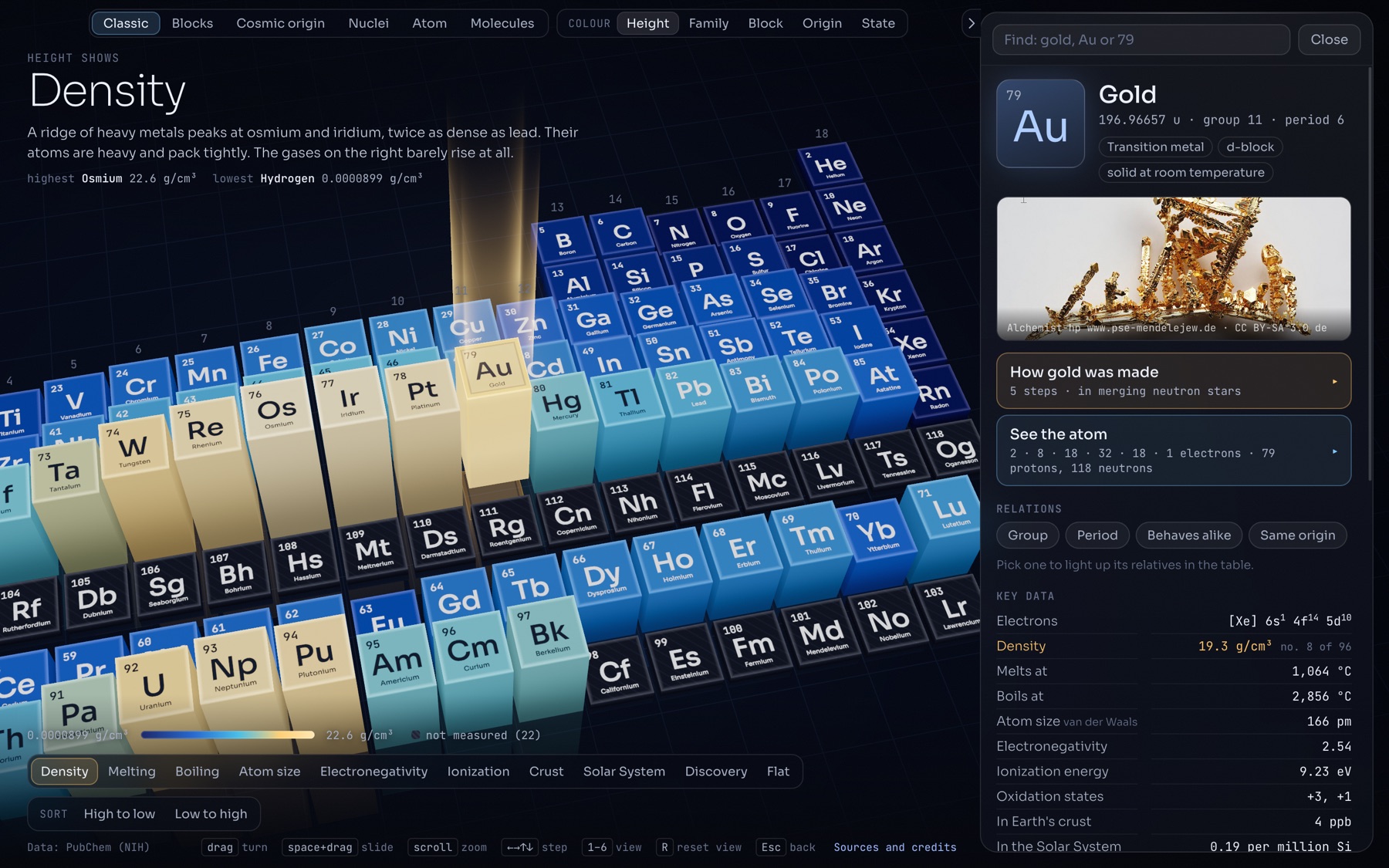
Density, melting point, the size of the atom, how much the Solar System holds. Sort the whole table by any of nine properties and see who leads and who comes last.
Every number names its source. Estimates are labelled as estimates, models as models, and "not measured" is never filled in with a guess.
The app makes no network connections. All data and all 105 pictures are inside it. Links to Wikipedia open in your browser.